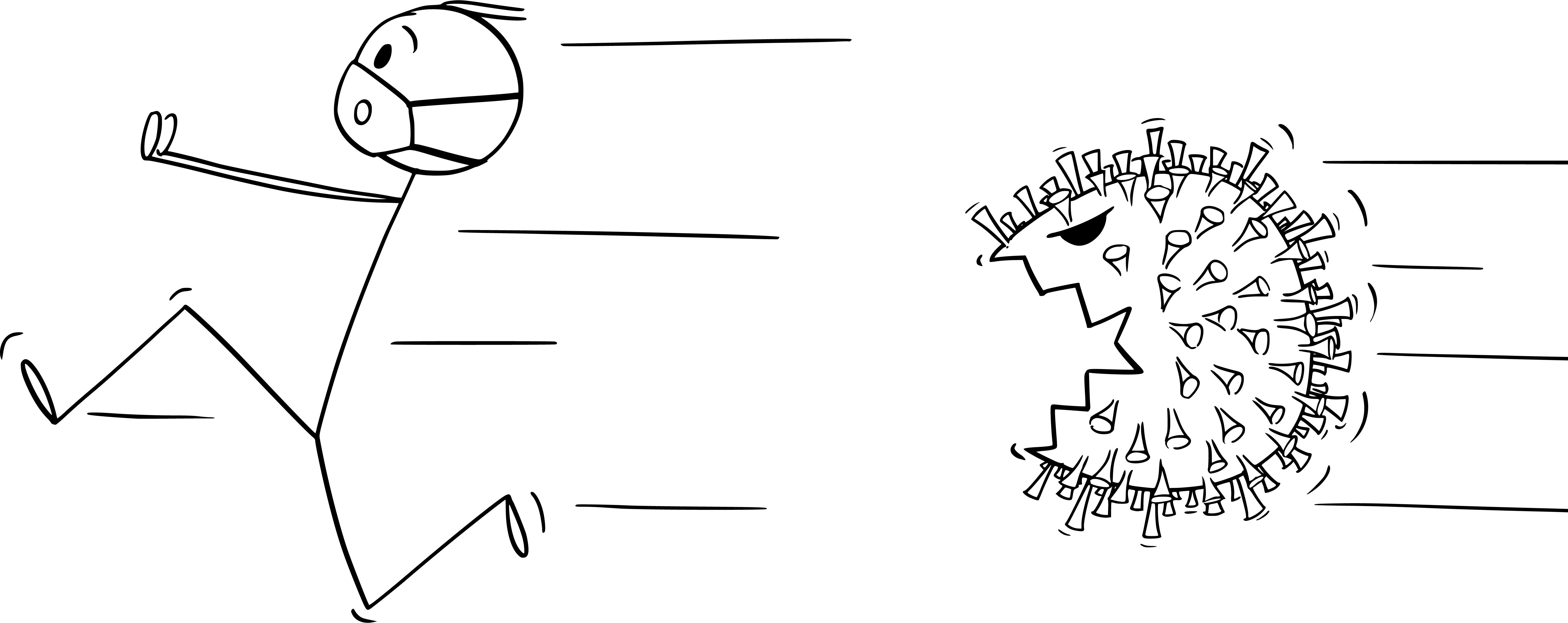
SOCIAL DISTANCING
Unless you’re a hermit, it’s really difficult to change the habits of a lifetime overnight.

If the past 40 years have given us anything more pointless than the home Betamax video recorder, it would have to be social labelling. Once upon a time, the village idiot was just that – a local person who was a couple of kangaroos short in the top paddock, and who was subsequently dissuaded from trying to become a rocket scientist or an airline pilot. We knew who those people were, and they knew it too, and it was never an issue until we were all told it was. Now, the village idiot is a treasured individual with social interaction issues and the right to be whatever they choose, libraries are information resource centres, a Peeping Tom is a stare rapist, a troll is an armchair activist, and simply being nice to others is environmental justice. There has been a litany of pointless titles afforded to things that once had real names, so when the term Social Distancing was created, I immediately hated it as a matter of course.
Of course it makes sense as a necessary safety measure, but it smacks of political correctness and is thus the enemy as a term – and I will continue to hate it on principle. It also sounds like a bit of an insult – “oh, don’t talk to him; he’s a social distancer”, or “keep your social distance, freak!” It’s also worse when it’s used in its full form – to practise social distancing – as though it’s a new dance step like the Madison or that hideous bird dance. Personally, I think we should call it exactly what it is, but abridging “keep at least two metres away from me before you kill us all, you diseased creature” isn’t easy to shorten. Perhaps if it was a more menacing or terrifying term, a greater number of people might abide by the rule. We could call it an Anti-Infection Distance or a Droplet Defence Zone, or maybe the COVID Chasm or the Antiseptic Abyss. The list goes on, but of course the die has been cast globally and it will always be known as social distancing.
For many older people, social distancing comes easily. The glittering lure of movie premieres, art exhibitions, outdoor celebrations, annual shows, circuses, wine tastings, balls, fine dining and media launches lost their allure long ago. Parenting replaced partying at the same time Farex replaced the Gin & Tonic and bath time took over from spa parties. While we were busy creating the next generation, the world changed as it does for every bright young thing, and we became last century’s youth. Most of us were happy to leave behind a hectic social life that equally crippled our feet and bank accounts, while a few who partnered and parented young decided to have a stab at the good life by acting half their age and embarrassing their children when they hit their forties. For me, social distancing means I can now get away with not having to socialise – I finally have a legitimate excuse for wanting to stay home in my own comfort zone without having to travel anywhere (apart from wanting to see those closest to me). I’m also no longer the only person in the room who wonders about the bacteria content of a custard tart in an open shelf, if the person who sat in the theatre chair before me was flatulent or slightly incontinent, or if the trolley guy at my local supermarket will ever learn not to pick his nose before collecting trolleys (that’s totally true). Suddenly, people are beginning to think like me and wonder where all the germs live, and I’m loving it. My inner Elbit is loving it as well, because Mum and Ol’ 76 are toeing the line, wearing masks when they’re outside the front gate, using the alcohol hand-wash, spraying the shopping with ethanol and generally taking this thing seriously. I’m also seeing posts by like-minded people on Facebook, wherein many are enjoying the time to finally restore that car or pursue that hobby without any interruptions aside from the phone (which they can ignore) and their families (whom they can’t ignore).
Are we in danger of becoming more distant from each other while this pandemic takes its toll, or will we go back to the way we were before we had to practise social distancing? Your guess is as good as mine, but I have an inkling that life can’t possibly be the same again if what the world has endured is to have meaning. Of course we’ll get to hug our children and grandchildren again once the worst of it is over, but those beyond the family circle might not get the hugs and kisses they once did. Our inner Elbits recognise that danger will continue to lurk in every saliva droplet for some time, so we won’t be as liberal with our affections as we once were. For my generation, that’s easy. We were raised in the 50s, and 60s by parents to whom social distancing was the norm. There was no hugging and kissing aside from bedtime or when your foot slipped from the bike pedal and you lost the top of your toe on a steep downhill run. That sort of affection was judiciously meted out, and it meant more as a result. If we got a “very good” from Dad, it was today’s equivalent of winning the Nobel Peace Prize, and if Mum burst into tears in front of us it meant that somebody real had died, rather than a cast member from Home and Away being drowned, stabbed, abducted, blown away in a typhoon or swallowed up in an earthquake. Eventually, for the large percentage of us who survive COVID-19 and social distancing, we will embrace our clean, new world and emerge from our isolation with a greater appreciation for life. For me, it will also mean that the next time I give the handle of the shopping trolley a good wipe down with disinfectant, I finally won’t get funny looks – I’ll save them for that nose-picking trolley guy!
Follow My Blog
Get new content delivered directly to your inbox.
 Elbit vs. COVID-19